Hello all, here is the legendary Hollywood screenwriter and television producer Mara Brock Akil. She is the mastermind behind iconic hit shows like Girlfriends, The Game, and Being Mary Jane. Looking just fabulous at the young age of 56.
We are all thankful for Mara and all of her contributions. Big Shout out to you from all of us at The NA Times.
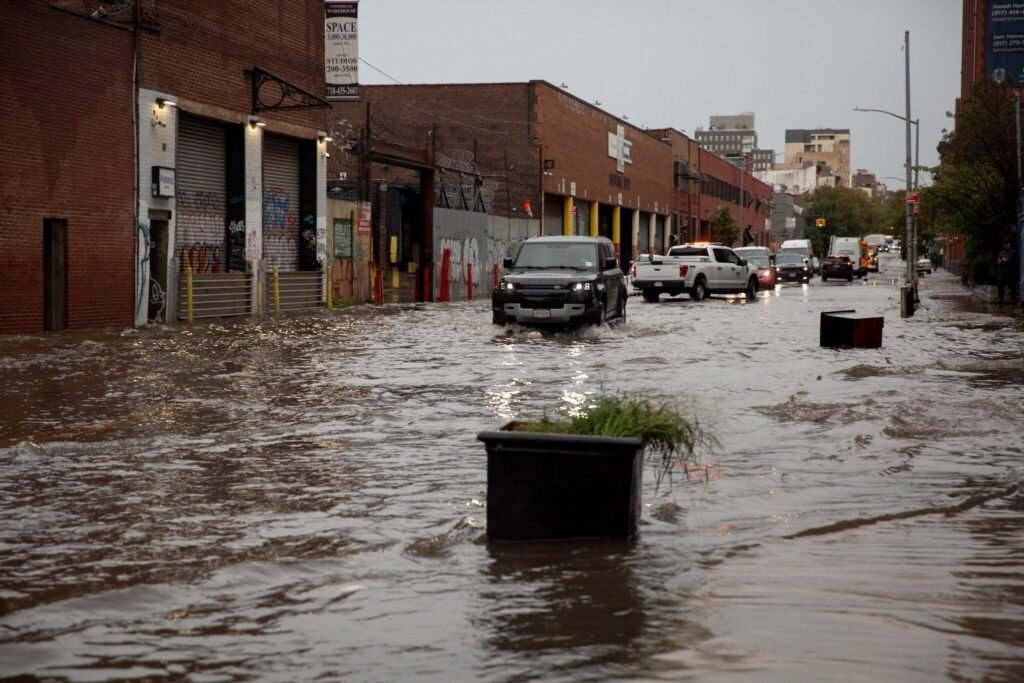
A powerful, slow-moving nor’easter tore through Brooklyn and the greater New York City area this past weekend, flooding streets, downing trees, and leaving thousands without power as the storm parked itself over the region for the better part of three days.
Flooding along a Brooklyn street during the weekend nor’easter. Photo: The New York Times
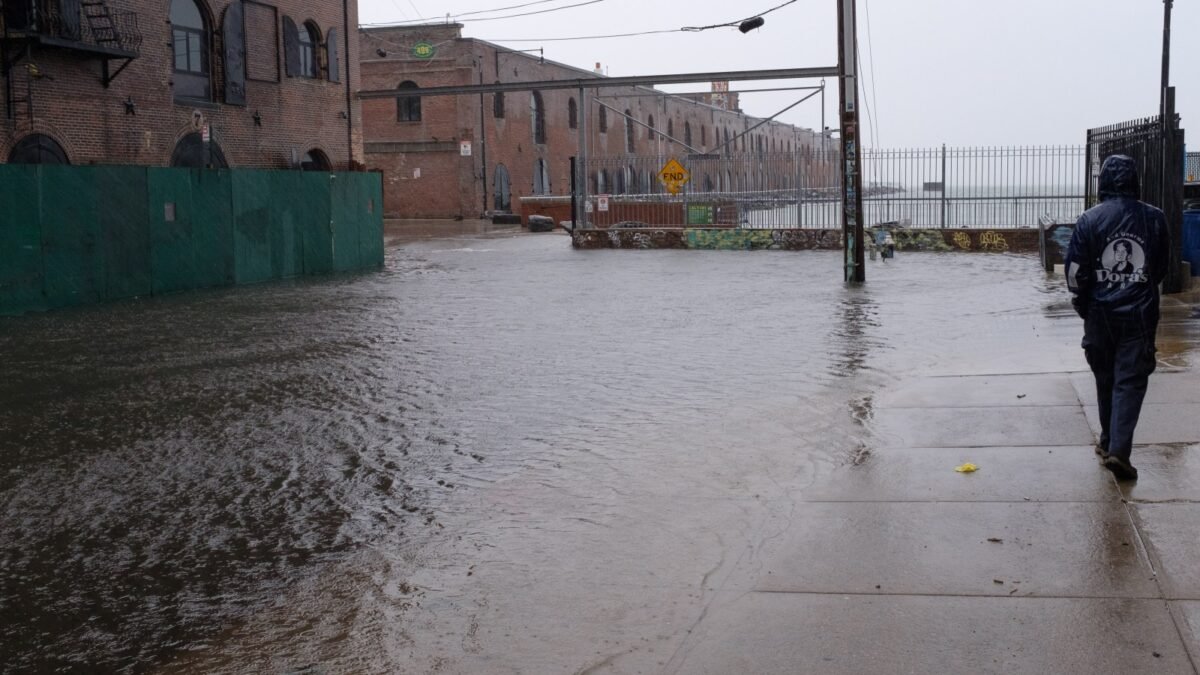
Governor Kathy Hochul declared a state of emergency for New York City on Friday, just hours before the storm rolled in with wind gusts topping 55 miles per hour. By Saturday, high tides had already pushed water into low-lying neighborhoods across the borough, with flooding reported from Coney Island to Red Hook and Greenpoint. In Coney Island, the MTA installed storm doors at subway entrances along Mermaid and Neptune Avenues to try to keep floodwater out of the system.
High tides pushed water into low-lying neighborhoods from Coney Island to Red Hook. Photo: The Gazette
The flooding continued into Sunday as a second round of high tides swept through the region. Streets across Brooklyn turned to rivers, and fallen trees littered blocks throughout the borough, snapping power lines and leaving residents in the dark.
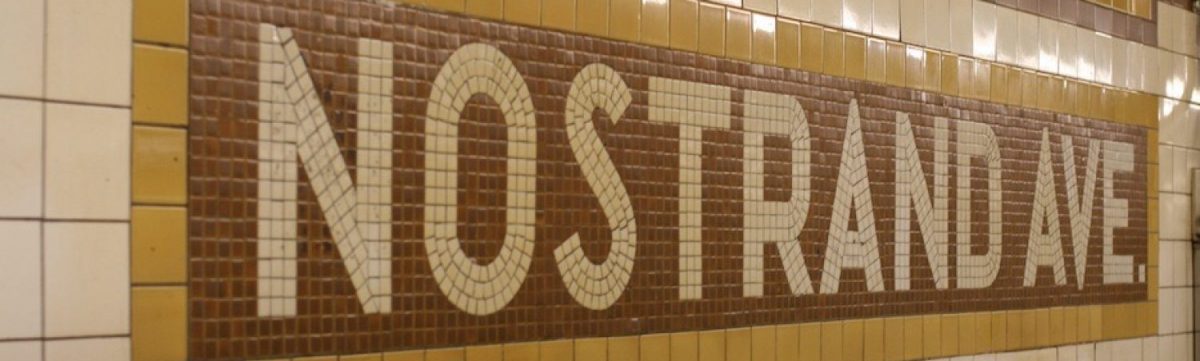
The storm’s impact was felt hardest in East Flatbush, where a brick parapet wall collapsed at a three-story building on Church Avenue, just off Nostrand Avenue. The collapse forced dozens of residents from their homes as emergency crews worked to secure the building and assess the damage.
Emergency crews assess a Church Avenue building in East Flatbush after a parapet wall collapse. Photo: ABC Channel 7
Citywide, the nor’easter proved deadly. A New York City Housing Authority worker was killed after being struck by a falling tree, and four other people were hospitalized with injuries after also being struck by falling trees during the height of the storm. Across the Northeast, more than 130,000 customers lost power at the storm’s peak, with Long Island and other parts of New York state among the hardest hit.
Fallen trees littered blocks across the borough, snapping power lines. Photo: SuaraGarut.id
By Monday, the storm finally began to loosen its grip on the region, with forecasters calling for conditions to ease through the start of the week, though lingering rain and wind were still expected across parts of New England.
For Brooklyn residents cleaning up in the storm’s aftermath, the message from city officials was clear: stay clear of downed power lines and damaged structures, and report any storm damage to 311.
Quick PSA for our fellow New Yorkers: there’s a real chance you (or someone in your family) has money sitting with New York State right now, just waiting to be claimed. Here’s what to know and how to check, in under five minutes.
Wait, the State Has My Money?
It’s more common than you’d think. Banks, insurance companies, corporations, and even the courts are legally required to hand over dormant or forgotten accounts to the New York State Comptroller’s Office. Think old savings accounts, uncashed checks, forgotten security deposits, unused gift cards, insurance payouts, stock dividends, or wages that never made it to you.
Once an account’s gone inactive long enough, it’s considered abandoned property and gets turned over to the Comptroller’s Office of Unclaimed Funds, no fee, no time limit, and it just sits there under your name until someone comes looking for it.
The Numbers Are Wild
The Comptroller’s office reports returning roughly $2 million a day to New Yorkers who file claims, and it’s already sent back over $163 million so far this year alone. Multiply that out over the years and you start to see why so many people have unclaimed cash out there without even knowing it.
How to Check (It Takes Minutes)
This part is genuinely easy:
Head to osc.ny.gov/unclaimed-funds and use the free search tool.
Enter your last name (or your business name) and hit search.
If there’s a match, you’ll see the details and can start a claim right online, most are paid out within 30 days.
No luck under your exact name? Try nicknames, maiden names, common misspellings, or old addresses.
It’s also worth searching for family members, since you can flag anything you find and the office will notify them directly. And if a claim isn’t found online but you know it’s out there, you can always follow up by mail.
A Word on Scams
Because this topic involves “free money,” it’s naturally a magnet for scammers. A few things to keep in mind: the Comptroller’s Office will never charge a fee to release your funds, and it won’t ask for sensitive personal or financial info out of the blue over email or a random link. If someone reaches out claiming to be “the government” and wants payment or private details before releasing your money, that’s phishing, full stop. Stick to the official site and you’re safe.
Bottom Line
It costs nothing and takes five minutes to check, so there’s really no reason not to. Go run your name (and your parents’, while you’re at it) through the database. Worst case, you find nothing. Best case, a check shows up in your mailbox.
Apple finally did it. At yesterday’s “Surprise and Shine” event at Apple Park, the company pulled back the curtain on its first-ever foldable iPhone — and after years of rumors, leaks, and speculation, the real thing is even more ambitious than most of us expected. Say hello to the iPhone Duo.
A New Shape for iPhone
This was also a bit of a milestone moment behind the scenes: it marked John Ternus’s first keynote as Apple’s CEO, following Tim Cook’s exit earlier this month. Fitting, then, that he used the stage to introduce what Apple is calling the biggest change to the iPhone in almost two decades.
The Duo uses a book-style folding design, closed it’s short, wide, and pocketable, but open it up and you get a full 7.6-inch internal display alongside a 5.4-inch outer screen for quick, on-the-go use. Both panels are Super Retina XDR OLED with ProMotion up to 120Hz, always-on support, and serious outdoor brightness. Apple says the unfolded screen is its largest iPhone display ever, offering roughly 50% more screen real estate than the iPhone 18 Pro Max.
Built Like a Tank, Folds Like Paper
The engineering here is the real headline for gadget nerds. The frame and hinge cover are Grade 5 titanium, with a mirror-polished body and a hinge made from over 100 individual components engineered to keep the screen flat when open and stress-free when folding. Apple leaned on its Vision Pro team to help pull it off, and it shows: unfolded, the Duo is just 5.2mm thick, making it the thinnest iPhone Apple has ever made. Folded, it’s a more familiar 11.3mm and weighs 254 grams.
One detail worth calling out: the inner display uses a nano-texture finish specifically designed to cut down on glare and make that dreaded foldable-phone crease far less noticeable. Early hands-on impressions suggest Apple may have actually solved the crease problem that’s plagued every other foldable on the market.
The Trade-Offs
A phone this new comes with some notable departures from the iPhone playbook. There’s no Face ID here, instead, Touch ID is built into the side power button. The rear camera system skips the telephoto lens found on the iPhone 18 Pro, sticking with a 48MP main and 48MP ultra-wide pairing. Under the hood, it runs the same A20 Pro chip found in the iPhone 18 Pro lineup, backed by a dual-battery system built for the two-screen design.
It’s also an eSIM-only device, and while Apple didn’t mention MagSafe on stage, the spec sheet confirms it’s still supported.
Price and Release Date
Here’s the part that might make you wince: the iPhone Duo starts at $1,999 for the base 256GB model, climbing to roughly $3,000 for the 2TB configuration. That’s a real premium over the iPhone 18 Pro and Pro Max, which start at $1,199 and $1,299 respectively. For anyone not ready to pay upfront, Apple’s new Apple Upgrade leasing plan starts at $57.99 a month.
It comes in two colorways, Star White and Night Sky, and unlike the rest of the new iPhone lineup (which ships September 18), the Duo won’t hit shelves until Friday, October 23, in more than 70 countries.
Worth the Wait?
Apple took its time getting here, and it shows in the details, the titanium build, the nano-texture display, the hinge engineering. Whether it’s worth the price tag (or the trade-offs like no Face ID and no telephoto) is going to come down to how it actually feels to use day-to-day, and how that hinge holds up months from now. But as a first swing at a totally new iPhone category, the Duo is easily the most interesting thing Apple has shipped in years.
Will you be lining up for one in October, or sitting this generation out? Let us know in the comments.
September in New York means the light gets a little gentler, the crowds thin out just enough, and — best of all — some of the city’s best museums are throwing their doors open for free. Whether you’re a broke-and-proud local or just love a good deal, here’s your full roundup of NYC’s free museum days this September, plus the spots that are always free, every single day.
September Free Days
Weekly & Recurring Free Days
Sept 2, 9, 16, 23 & 30 — Museum of the City of New York, Free Wednesdays, open to 9 PM
Sept 3, 10, 17 & 24 — Museum of the Moving Image, 2–6 PM
Sept 3, 10, 17 & 24 — Museum of Jewish Heritage, 4–8 PM
Sept 4, 11, 18 & 25 (plus Sept 13) — Whitney Museum, Fridays 5–10 PM, Sunday all day
Sept 10, 11, 17, 18, 24 & 25 — China Institute Gallery, 5–8 PM
Sept 17 — Intrepid Museum Astronomy Night, 5:30–9 PM
Sept 24 — Brooklyn Children’s Museum, 2–5 PM
Heads up: Whitney, MoMA, the Morgan, New York Hall of Science, and Poster House all recommend reserving your free tickets early — these dates tend to fill up fast.
Always Free
No calendar-watching required for these — they’re free every day of the year.
Bronx Museum
Derfner Judaica Museum
Center for Brooklyn History
Coney Island History Project
Lefferts Historic House
Waterfront Museum
Weeksville Heritage Center
African Burial Ground National Monument
American Folk Art Museum (open through Sept 13)
Hispanic Society Museum & Library
Museum at FIT (opens Sept 16)
National Museum of the American Indian
Nicholas Roerich Museum
Print Center New York (opens Sept 17)
Rose Museum at Carnegie Hall (reopens in September)
Skyscraper Museum
Theodore Roosevelt Birthplace
Center for Jewish History
Federal Hall National Memorial
Hamilton Grange National Memorial
General Grant National Memorial
MoMA PS1
King Manor Museum
Queens County Farm Museum (except ticketed events)
SculptureCenter (opens Sept 19)
Dia Chelsea
New York Earth Room
The Broken Kilometer
NYPL Treasures Exhibition
However you like to spend a Sunday afternoon — staring down a dinosaur skeleton, wandering a Chelsea gallery, or finally making it to that museum you’ve been meaning to visit for years — September’s giving you plenty of free excuses. Pin this one and plan your month around it.